Understanding Moles & Removal Options
Understanding Moles
Moles and skin lesions are incredibly common, and most people will develop some form of mole during their lives. Many of the most common moles are completely harmless and do not require any medical intervention. However, other moles should be assessed by a physician.
While most moles are harmless, some require evaluation by a medical professional — especially those that change in appearance over time, cause symptoms, or look different from surrounding moles. Changes in size, colour, texture, or border irregularities can sometimes indicate a risk of skin cancer, and prompt assessment can be vital to ensuring safety and peace of mind.
Causes & Contributing Factors
Moles are caused by a combination of genetic and environmental factors:
- Genetic predisposition: Many moles are hereditary.
- Sun exposure: Ultraviolet (UV) radiation is associated with increased mole formation and changes over time.
- Hormonal changes: Moles can change or appear during puberty or pregnancy.
Types of Skin Lesions We Treat
At Shine MD, we evaluate and treat a variety of skin lesions in addition to moles:
- Common Moles: Usually benign and may be removed for cosmetic reasons or medical evaluation.
- Skin Tags: Small, soft bumps connected by a thin stalk; medically harmless but often removed for comfort and appearance.
- Seborrheic Keratoses: Wax-like, scaly growths that tend to increase with age.
- Sebaceous Hyperplasia: Enlarged oil glands that form tiny bumps, most often on the face.
- Milia: Milia are small, white or yellowish bumps that appear just beneath the skin’s surface. They are easily removed with topical numbing and Erbium laser with a low downtime and no scar approach.
Each lesion type has distinct characteristics. Our physicians can differentiate these during clinical assessment and recommend suitable treatment approaches.
How Mole & Lesion Removal Works
Medical Evaluation Before Removal
Before proceeding with removal, it is important for a physician to evaluate any mole or lesion. If a mole appears asymmetrical, irregular, rapidly changing, itchy, bleeding, or otherwise concerning, further assessment or a biopsy may be recommended.
If you are concerned about a mole, you may first see your family doctor, a walk-in clinic physician or nurse practitioner for evaluation. If your provider determines that the mole has concerning features, they can refer you to Shine MD for further assessment.
If the mole has already been assessed and determined to be benign (non-cancerous), you may contact the ShineMD team directly to arrange elective mole removal (fees apply). Only biopsies for concerning moles are covered by MSP. Cosmetic mole removals are not covered benefits, and standard fees apply.
Please note that physicians at Shine MD do not perform full-body mole checks or annual mole surveillance exams.
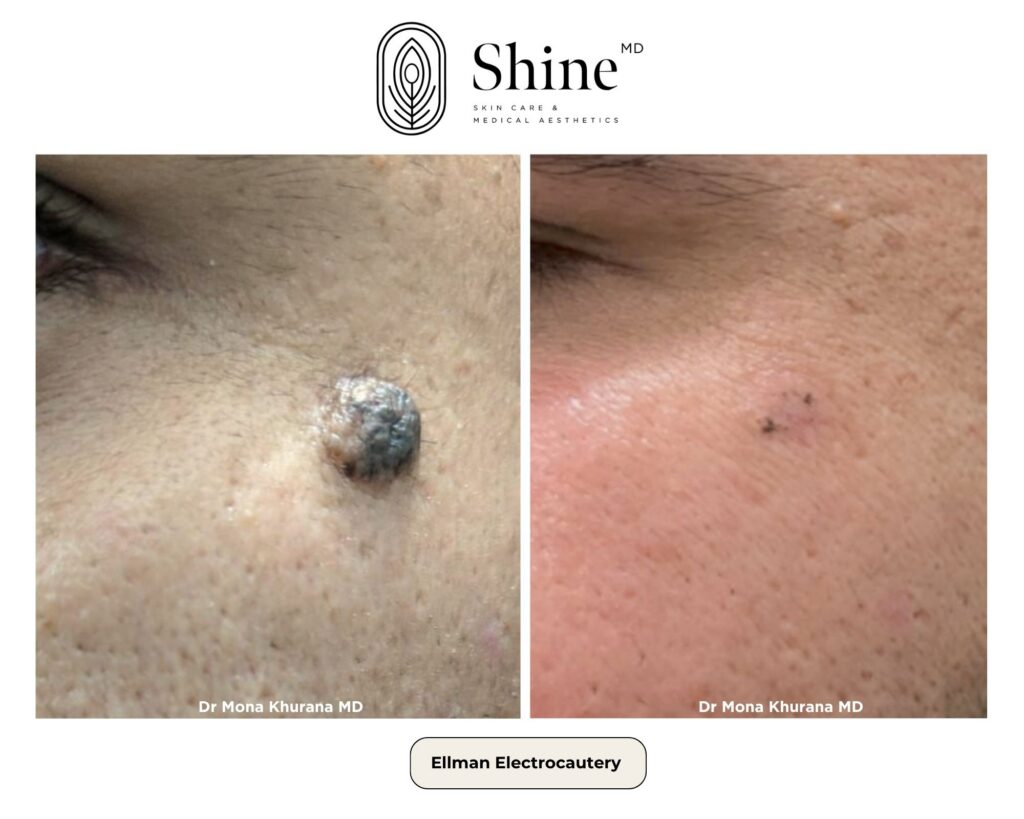
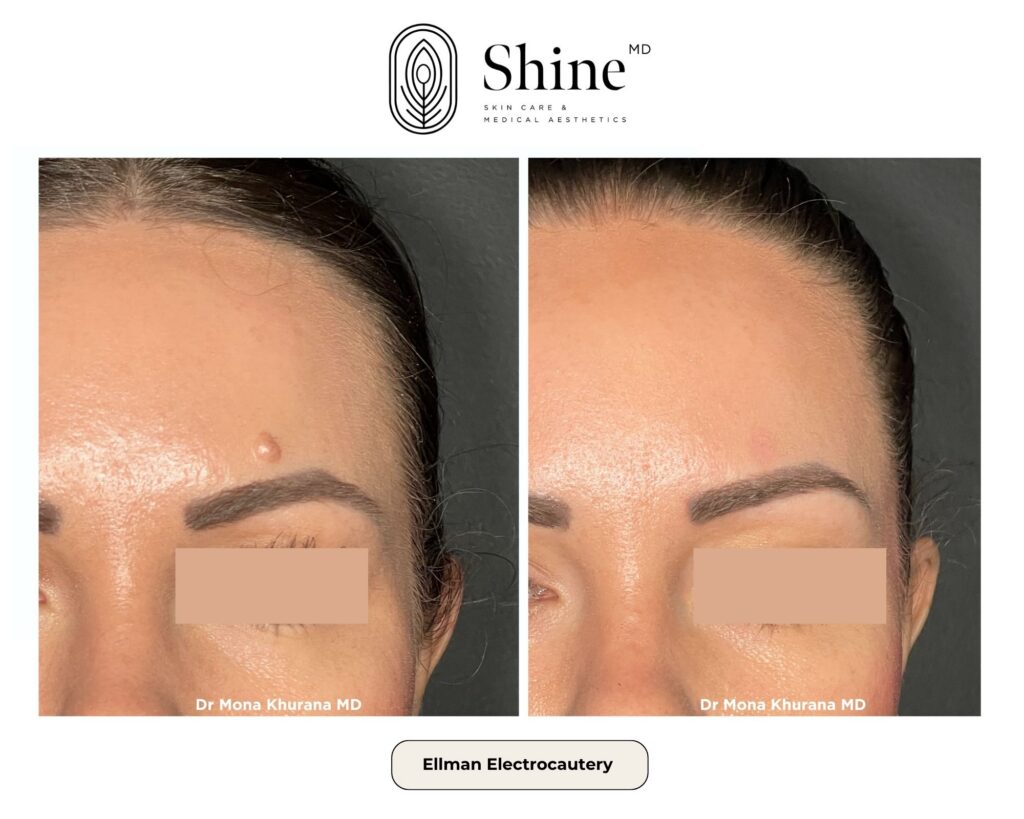
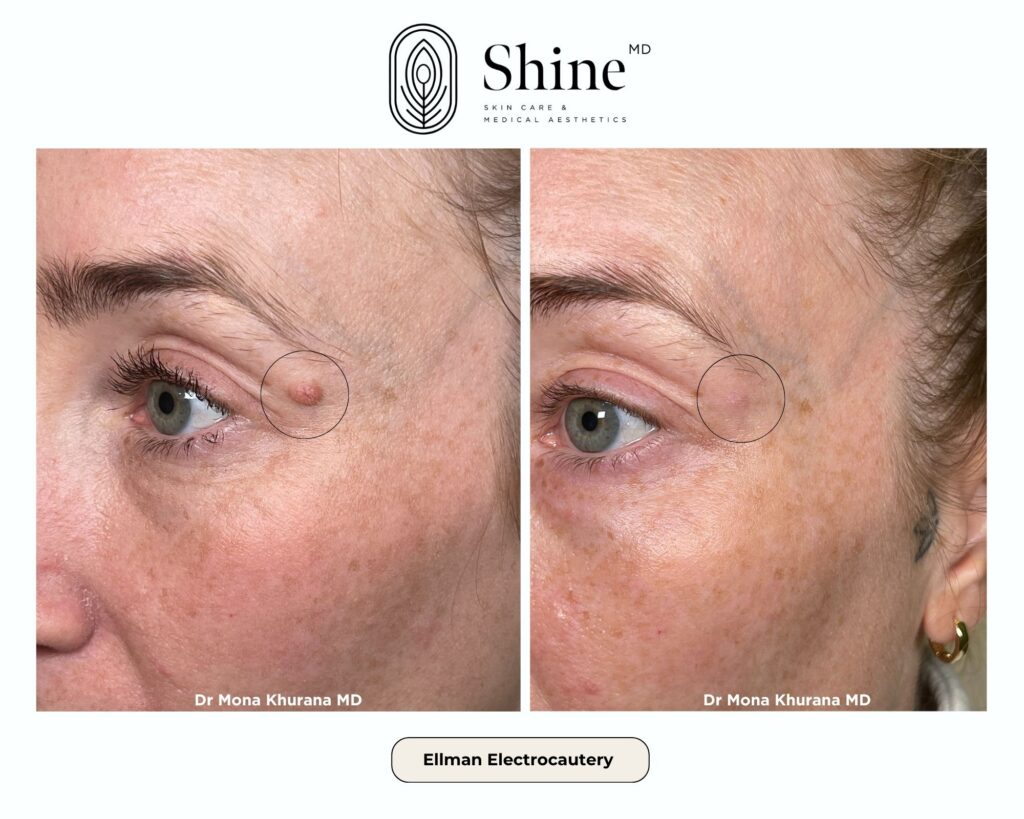
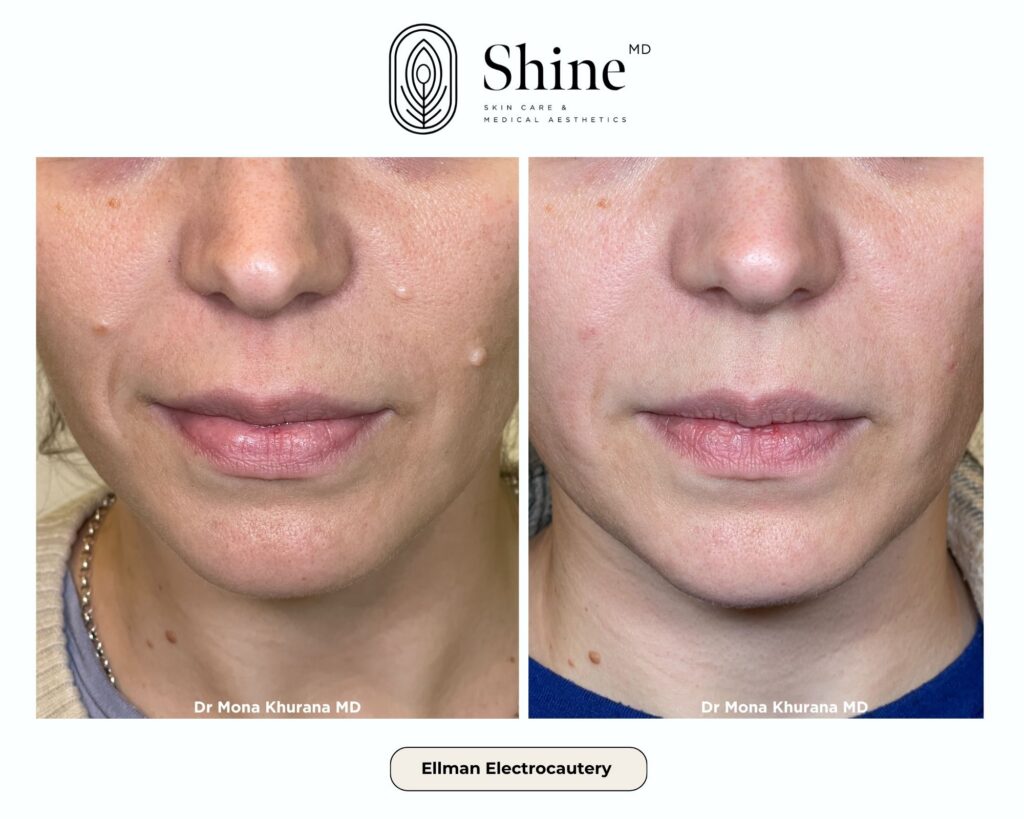
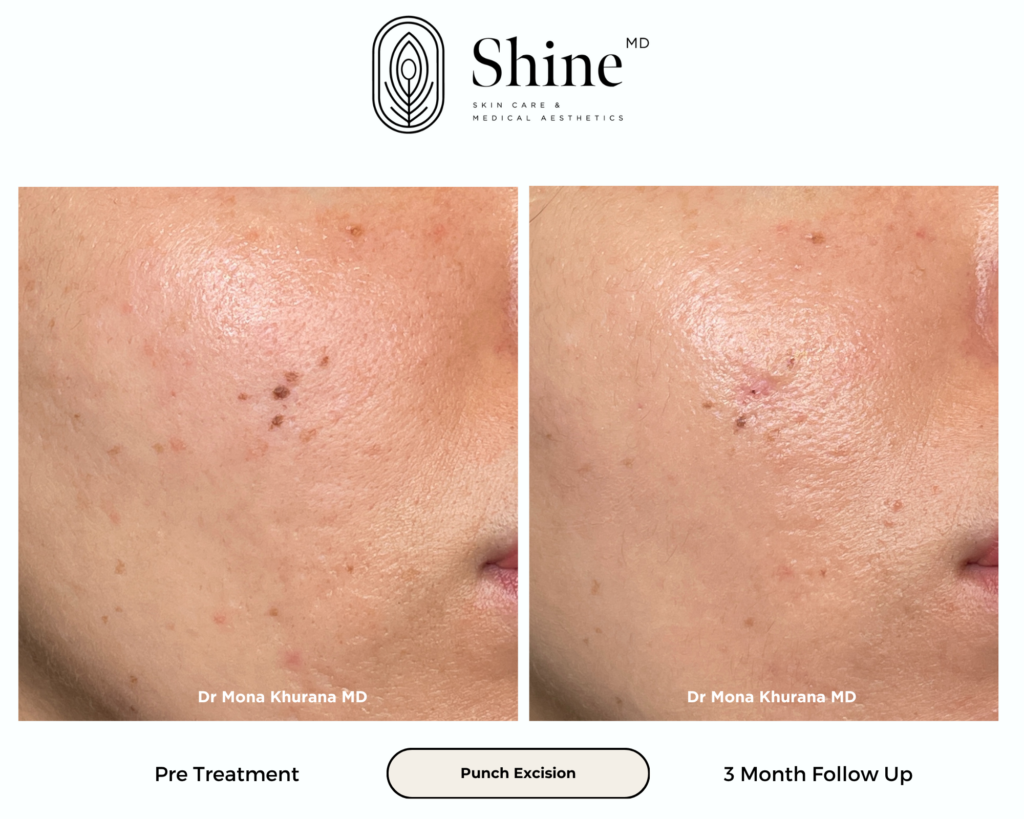
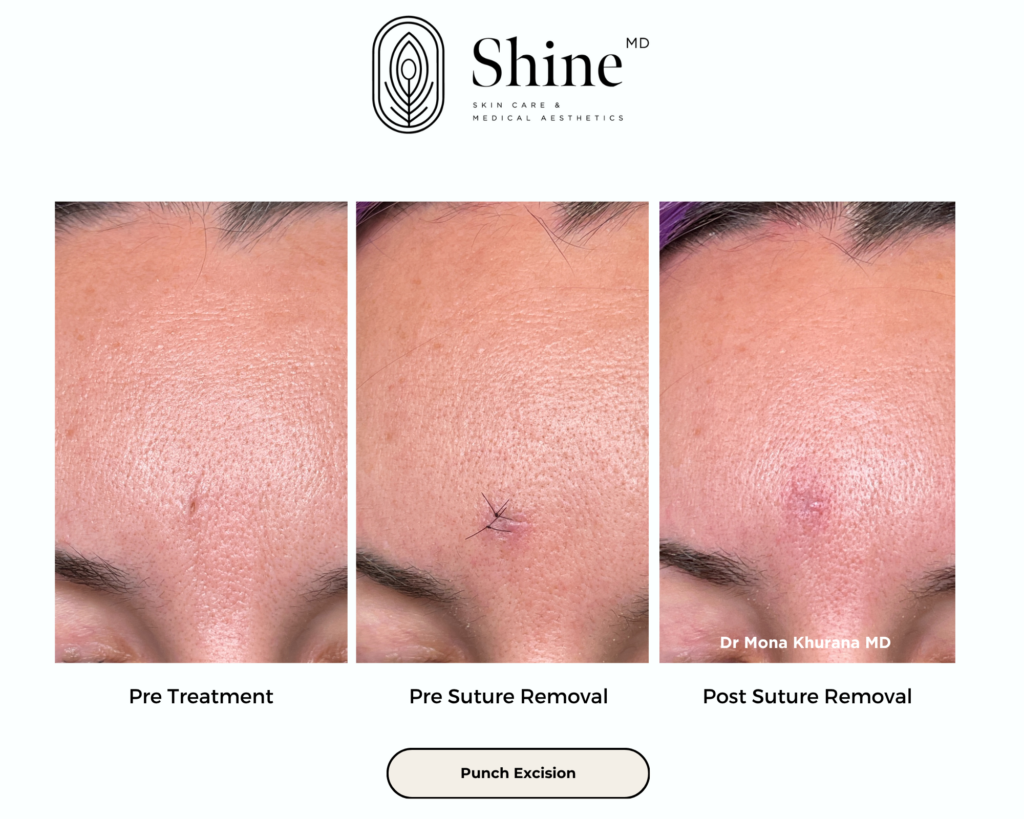
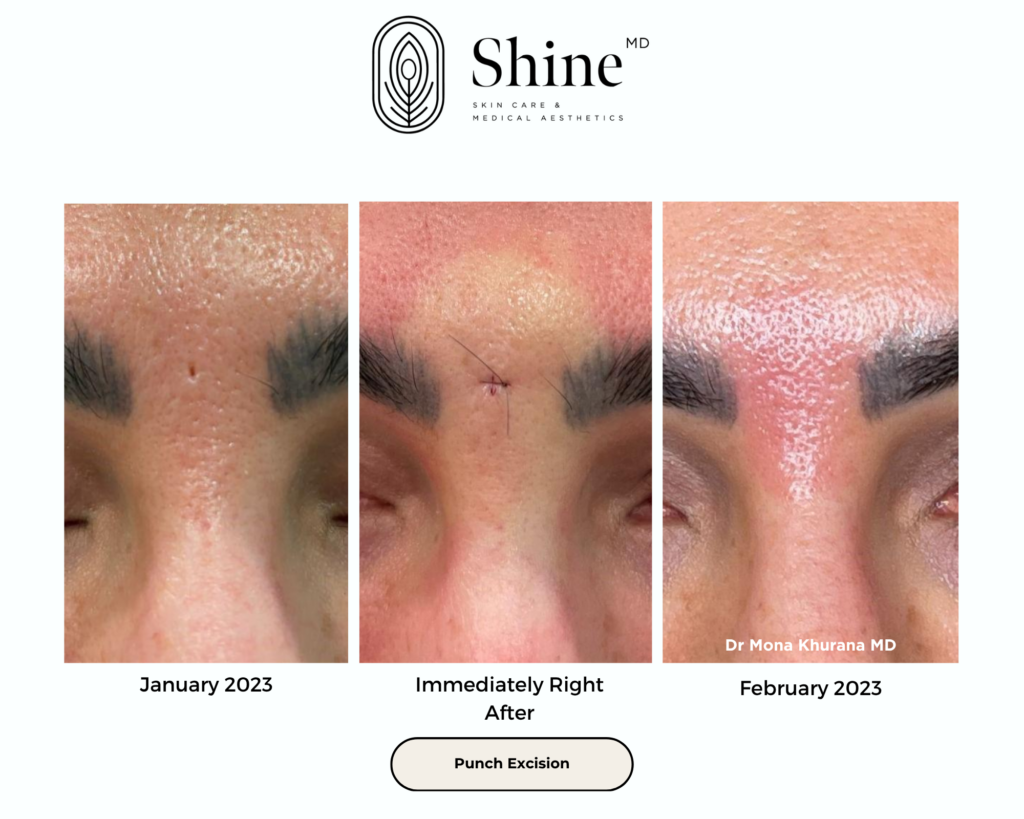
Types of Moles & Methods of Removal
Moles are a common form of skin lesion and can vary in appearance, depth, and behavior. At Shine MD, each mole is carefully assessed to determine the safest and most appropriate mole removal method based on its characteristics and your treatment goals.
Pigmented Flat or Raised Moles
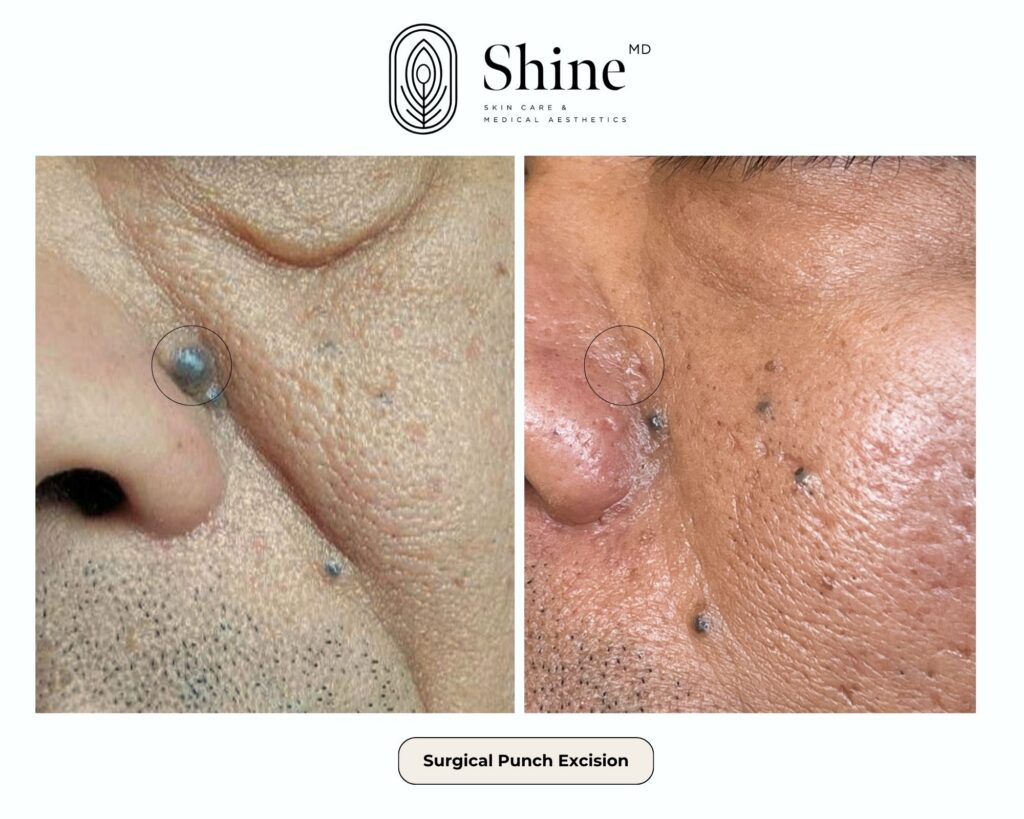
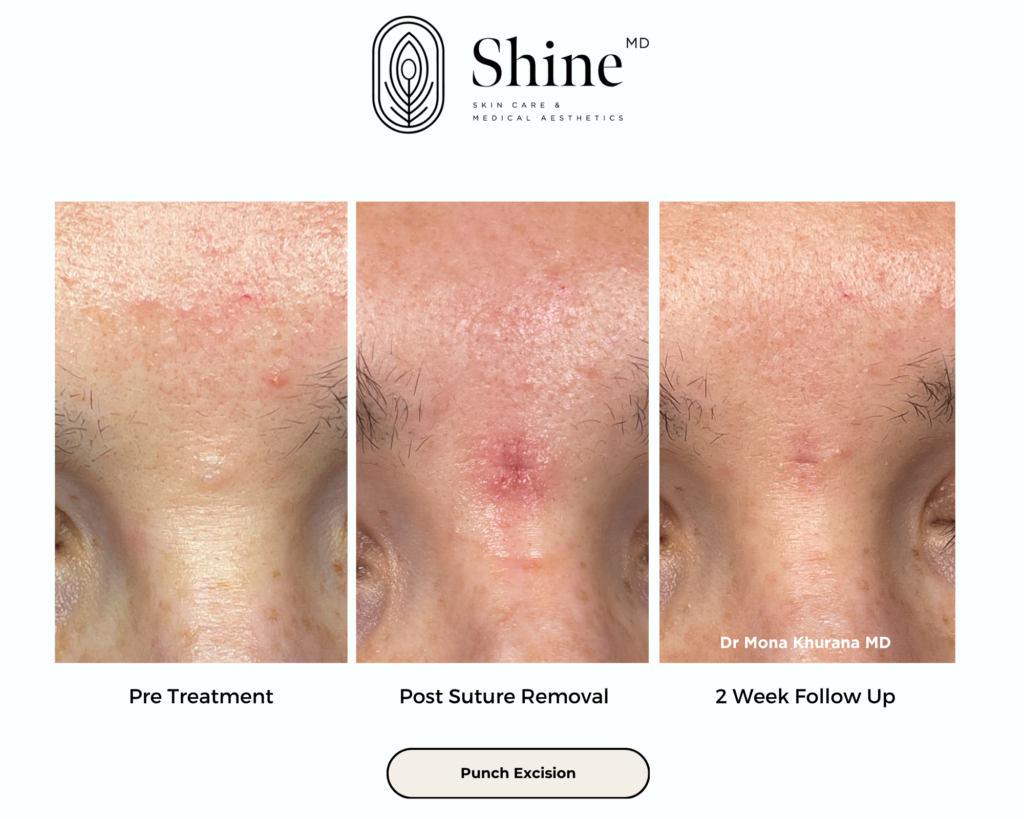
Pigmented moles, whether flat or raised, often extend deeper into the skin. For complete and definitive removal, these lesions typically require a surgical punch excision.
Moles larger than 6 mm may require a more extensive elliptical surgical excision, which involves removing the lesion with a margin of surrounding tissue and closing the area with sutures. In some cases, particularly for larger lesions or cosmetically sensitive areas, referral to a plastic surgeon may be recommended to optimize cosmetic outcomes.
Surgical excision remains the gold standard for removing pigmented moles, suspicious lesions, or when a specimen is needed for pathology.
Skin-Coloured Raised Moles
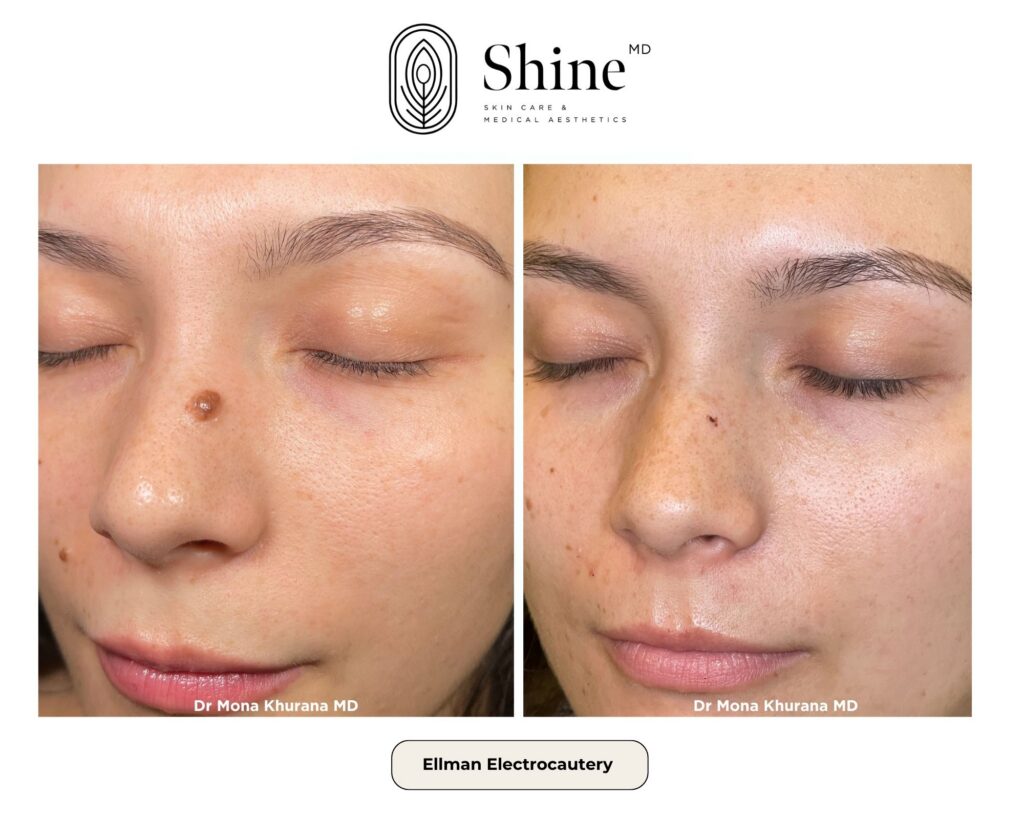
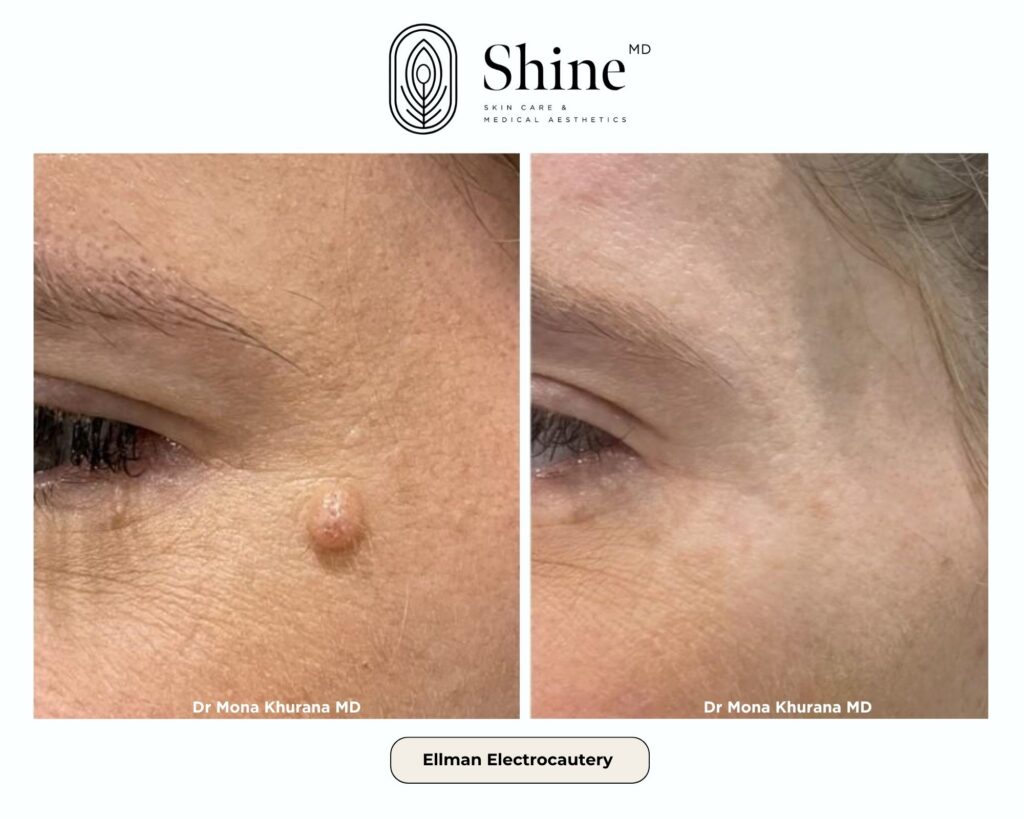
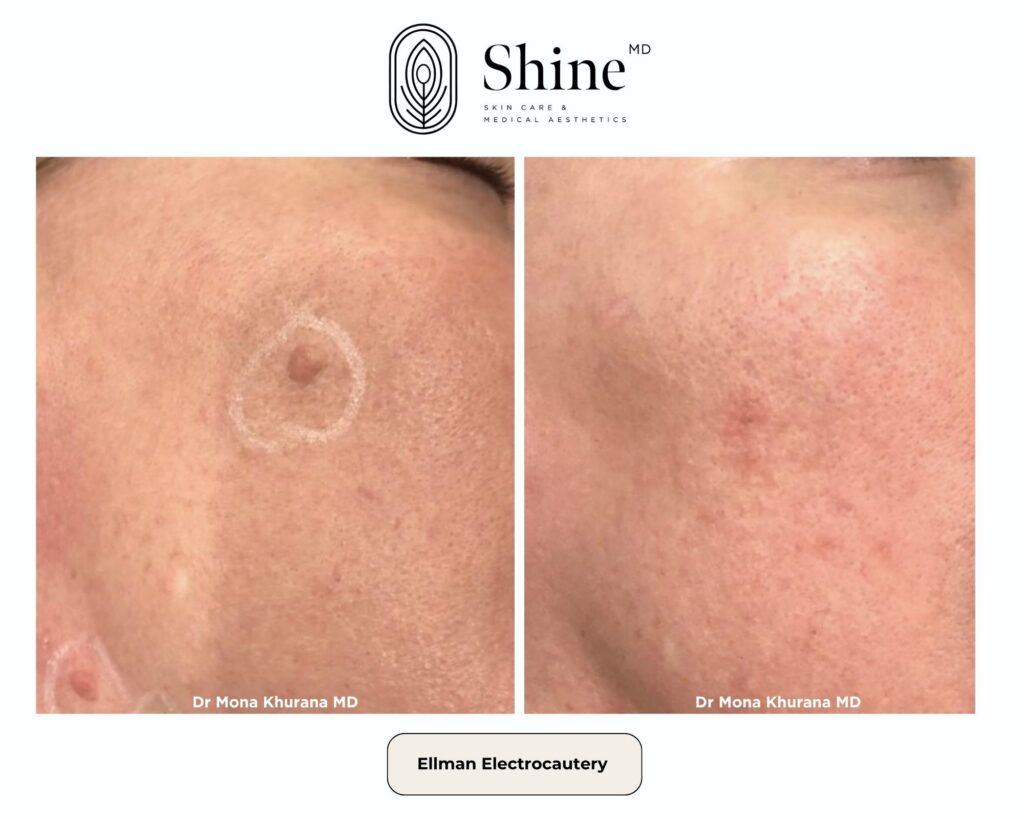
Skin-coloured, raised moles that protrude from the surface of the skin may be treated with a more conservative approach using electrocautery.
This method gently shaves and flattens the mole, offering a low-downtime option with a reduced risk of scarring, making it an attractive choice for patients seeking cosmetic improvement. However, this technique does not remove the deeper base of the mole, and recurrence may occur over time.
Moles with Worrisome Features
(Atypical or Changing Lesions)
Some moles may demonstrate clinically concerning features. While these lesions are not always cancerous, they require careful assessment and may need to be biopsied based on clinical judgment, dermoscopic evaluation, and personal medical history.
At Shine MD, all pigmented lesions are evaluated for atypical features before any cosmetic or surgical decision is made.
Worrisome Features of Moles (ABCDE Criteria)
- Asymmetry – one half does not match the other
- Border irregularity – jagged, blurred, or uneven edges
- Color variation – multiple shades within one lesion
- Diameter > 6 mm – or lesions increasing in size.
- Evolution – changes in size, shape, color, or symptoms such as itching or bleeding
Moles that display these features can be considered suspicious lesions and should be properly evaluated prior to removal. In some cases, a skin lesion biopsy or surgical excision may be recommended.
Not all lesions with these features are cancerous. Each mole is carefully evaluated, and the most appropriate next steps are determined based on your individual assessment.
What is a Mole Removal Treatment Like?
The approach to mole removal is tailored to both the type of lesion and your individual preferences. At Shine MD, every procedure is designed to be comfortable, precise, and focused on optimal cosmetic results.
Before the procedure begins, the area is numbed with a local anesthetic (lidocaine) to ensure a completely comfortable and painless experience.
If you are nervous about the procedure or have a fear of needles, the team will offer you Ativan and/or laughing gas. The physicians will gently inject numbing in the area of treatment. Once the area is numb, the lesion will be removed with the electrocautery machine.
Many benign skin lesions can be removed using electrocautery, which is used to gently and precisely shave the lesion. This technique minimizes trauma to the surrounding skin, helping to support faster healing and improved cosmetic outcomes.
Following the procedure, a small superficial wound will be present where the lesion was removed. Over the next 3-7 days, the area forms a protective scab as it heals. Once the scab resolves, you may notice some temporary redness, which gradually fades over time. Many patients choose to use silicone gel sheets to enhance healing and reduce redness.
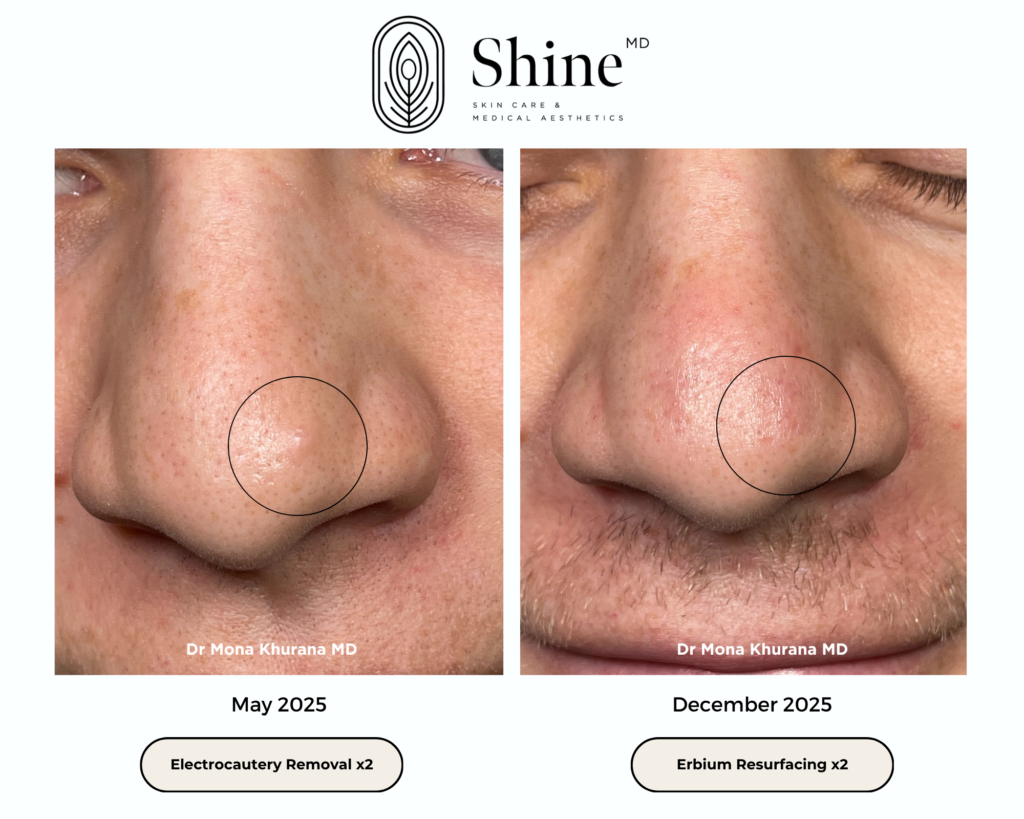
Dr. Khurana also utilizes the Erbium laser, a highly precise technology that gently vaporizes tissue to refine the skin’s surface. This is particularly effective for improving the appearance of moles, skin tags, and sebaceous hyperplasia.
In some cases, certain moles—especially those with suspicious features—require surgical excision. This involves removing the lesion more deeply and closing the area with sutures. This method is considered the gold standard when a specimen is needed for accurate diagnosis and complete removal.
Before the procedure begins, the area is numbed with a local anesthetic (lidocaine) to ensure a completely comfortable and painless experience.
If you are nervous about the procedure or have a fear of needles, the team will offer you Ativan and/or laughing gas. The physicians will gently inject numbing in the area of treatment. Once the area is numb, the lesion will be removed with the electrocautery machine.
Treatment Options at Shine MD
At our Vancouver clinic, mole and skin lesion removal is performed by experienced physicians using techniques that are safe, precise, and patient-centred:
- Electrocautery: This technology uses radiofrequency energy to gently shave or remove the lesion with minimal trauma to surrounding skin, often resulting in faster healing and reduced scarring compared to traditional methods.
- Erbium Laser Ablation: Ideal for refining the treatment area, lasers can precisely vaporise tissue. This is used for smaller, skin colored moles, based on the discretion of the treating physician.
- Biopsy & Pathology: If there are features of concern, the removed tissue can be sent for laboratory analysis (pathology) to rule out skin cancer. This additional diagnostic step is covered by the Medical Services Planof British Columbia when medically indicated.
If there are features of concern, the removed tissue can be sent for laboratory analysis (pathology) to rule out skin cancer. This additional diagnostic step is covered by the Medical Services Plan of British Columbia when medically indicated.
What is Recovery Like After Mole Removal?
Recovery following mole removal is typically quick and straightforward. Most patients experience initial healing within 5–7 days, during which mild redness, slight swelling, or light scabbing at the treated areas is completely normal.
Your skin’s response during recovery will vary depending on your skin type, as well as the size, depth, and location of the treated lesion. If electrocautery is used, it is important to understand that temporary skin changes, such as redness or pigmentation, are expected side effects of the treatment, not complications.
If multiple or larger areas are treated, you may prefer to plan your schedule accordingly, as visible healing may impact social or professional activities for a short period.
What to Expect Based on Skin Type
- Darker skin tones: Temporary post-inflammatory hyperpigmentation (darkening of the treated area) may occur. This can be minimized with diligent sun protection, including sunscreen and sun avoidance. Targeted skincare and advanced laser treatments can help accelerate fading.
- Lighter skin tones: You may notice temporary redness or pink discoloration (post-inflammatory erythema) at the treatment site. This is a normal part of healing and gradually resolves over time. The improvement can be accelerated with Broad Band Light (BBL) laser or Aerolase treatments.
If surgical punch excision is performed, you will have sutures placed and require a follow-up appointment for removal in 7- 10 days, depending on the site. You will have a linear scar at the removal site.
Supporting Optimal Healing
To enhance your recovery and achieve the best possible results, Dr. Khurana may recommend:
- Medical-grade skincare tailored to your skin type, specifically targeting pigmentation pathways
- Laser treatments such as BroadBand Light (BBL) or Aerolase to reduce redness or pigmentation
- Silicone gel sheets to support smooth healing and minimize discoloration
Long-Term Healing
While the surface of the skin heals quickly, deeper healing and collagen remodeling continue for up to one year after treatment. During this time, you’ll notice ongoing improvements in skin texture, tone, and overall appearance.
Fees and Appointment Process
Lesion and mole removal performed for cosmetic reasons is not covered by the Medical Services Plan of British Columbia (MSP).
The starting cost for removal of a single mole or skin lesion is $500, with additional fees for extra lesions or larger treatment areas. For cases involving multiple growths, pricing will be determined after an in-person or photo assessment by our team.
How the Process Works
- Contact our clinic team through our online contact form or by emailing photos of your lesion(s) to info@shinemd.com.
- Please ensure images are:
- Clear, well-lit, and in focus
- You indicate whether each lesion is raised or flat
- You specify how many lesions you would like assessed or removed.
- Our team will review your photos and provide preliminary guidance.
- Whenever possible, we will schedule your consultation and treatment on the same day.
- Consultation fees: The consultation fee is $250, which is applied toward the cost of treatment if it is completed on the same day.
Most patients choose to have their consultation and lesion removal completed in a single visit. During your appointment, the physician will thoroughly assess your lesion, discuss treatment options, and perform the procedure with precision and care.
Before & After Care
Proper pre- and post-treatment care can help optimise healing and aesthetic outcomes:
Before Treatment:
- Avoid sun exposure and tanning on the area.
- Discuss medications affecting bleeding (e.g., aspirin, NSAIDs) with your physician.
After Treatment:
- Keep the area clean and follow wound care instructions from your clinician.
- Use recommended products (e.g., silicone sheets) to support healing and minimise redness or scarring.
- Keep the treated area protected from UV exposure with sunscreen once healed.
Book a mole removal consultation at our Vancouver clinic.
At Shine MD, we understand that moles and skin lesions can be irritating and aesthetically bothersome. That is why we offer both medical and aesthetic skin lesion removal treatments.
Frequently Asked Questions
Skin lesions can be caused by a wide variety of factors, depending on the type of lesion. Some of the most common skin lesions can be hereditary, like moles and birthmarks. Moles form when melanocytes, skin cells that produce melanin, grow in clusters.
While many skin lesions are completely harmless, others can be cause for concern, especially those that can become cancerous. If you have a mole or skin lesion that is changing quickly, or is irregular in pigment and borders, it will require a medical assessment by one of our physicians.
A referral is required from your family physician or a walk in physician for assessment by one of the physicians at Shine MD. Abnormal appearing moles will be removed as a medical biopsy and sent for pathology assessment. This is a covered benefit by the Medical Services Plan of British Columbia. Moles that are deemed to be benign with no worrisome features can be removed by our physicians.
Some common forms of skin lesions include:
- Moles can occur anywhere on the body, and many moles are harmless. However, moles that grow in size or change shape or color should be examined by a physician. Moles can also be cause for concern if they start to itch, flake, or bleed.
- Skin tags can appear anywhere on the body, and look like small flaps of excess skin that are attached to the skin by a thin stalk. These lesions are usually harmless.
- Seborrheic keratoses are common lesions that can appear flat or raised and have a waxy or scaly texture. These lesions are more likely to develop as you get older.
- Sebaceous hyperplasia is a condition that causes small, skin-toned bumps on the skin. They occur when sebum gets trapped under the skin, enlarging the skin glands. These lesions are harmless but can be aesthetically bothersome. While these lesions are easily treated with Erbium Laser, sebaceous hyperplasia is a recurring issue and lesions may not resolve with a single laser treatment.
- Milia are small, white or yellowish bumps that appear just beneath the skin’s surface. Milia are completely harmless but often persist indefinitely without treatment and can be aesthetically bothersome. They are easily removed with topical numbing and Erbium laser with a low downtime and no scar approach.
Most moles are benign, but concerning features should prompt evaluation by a physician. At Shine MD, all lesions are assessed by a physician before removal to ensure an accurate diagnosis.
If you are certain that the lesion is benign, then no referral is required to book a consultation at Shine MD. You may contact the clinic directly to arrange an assessment with Dr. Khurana. The clinic team will ask you to send photos of the areas to ensure that you can be booked in for an elective mole removal appointment. The physicians at Shine MD will assess your moles, confirm the diagnosis, and recommend the most appropriate removal approach based on your individual presentation and skin type. Consult and removal fees apply. If a biopsy is clinically indicated, the associated pathology costs may be covered by the Medical Services Plan of British Columbia (MSP).
No. All mole removal procedures at Shine MD are performed under local anesthesia (lidocaine), which fully numbs the treatment area before any instrument is used. Once the numbing is injected, patients do not experience discomfort during the procedure. A brief stinging sensation from the anesthetic injection itself is the most commonly reported experience.
Individual moles can be removed in a matter of minutes. For patients having multiple moles treated in a single session, the total appointment time depends on the number and location of the lesions. This is discussed in detail during your consultation, so you can plan accordingly.
Yes. At Shine MD, patients with multiple moles across one or several areas can have all lesions treated in a single visit. Our physicians are experienced in treating moles on the neck, face, torso, and other locations systematically and efficiently, without compromising cosmetic precision.
Once a mole has been surgically removed, it will be unlikely to recur in the same location. However, patients who are prone to developing moles may continue to form new ones over time. This reflects an individual predisposition and is not related to the removal technique used.
If a mole is flattened or shaved with electrocautery, the base of the mole is still present so the mole can recur in the same location. Lesions such as seborrheic keratoses, dermatosis papulosa nigra and skin tags are unlikely to recur in the same location once removed with electrocautery.
Yes. Shine MD has particular expertise in treating patients with skin of color. Post-inflammatory hyperpigmentation (darkening of the treated area) is a temporary, known, and expected response in most patients with skin of color. This occurs as the skin heals and is a response to the treatment energy. While this is not harmful, it may take time to fade.
We take specific precautions to minimize pigmentation changes and support optimal healing. For patients who want faster improvement, we also offer optional post-treatment skincare and laser therapies to help even out skin tone. These additional treatments are elective and not included in the initial mole removal fee.
Keep the treated area clean and follow the wound care instructions provided by your clinician. Daily cleansing and the use of Aquaphor will improve your wound healing. Once the skin has fully healed, apply a broad-spectrum sunscreen to protect the area from UV exposure and to minimize post-inflammatory pigmentation. Avoid picking at or disturbing any scabs that form, as this can delay healing and increase the risk of scarring. If you have a surgical removal, sutures will be placed and will require a follow-up appointment for removal.
Most patients are able to return to their normal daily activities immediately or within 24 hours following treatment. Mole removal involves minimal to no downtime, making it a convenient option for even the busiest schedules.
To support proper healing, we recommend avoiding swimming, hot tubs, and saunas in the days following your procedure until the skin is fully healed. It’s also important to minimize prolonged moisture, friction, or sweating to reduce irritation and promote optimal recovery.
You may experience mild tenderness or sensitivity at the treated sites for a few days. This is completely normal and typically resolves quickly as your skin heals.
Treatments for Moles and Skin Lesions at Shine MD
Moles and other skin lesions can be diagnosed and removed by our physicians at Shine MD. If any concerning features are present, your skin lesion removal and biopsy will be covered by the Medical Services Plan of British Columbia. More information is available on our MSP Referral page. Moles that are removed purely for cosmetic reasons are not a covered benefit by the Medical Services Plan.
Discover Our
Before & After Gallery
Want to see real patient results from our innovative skin treatments? View our impressive before and after images in our photo gallery.
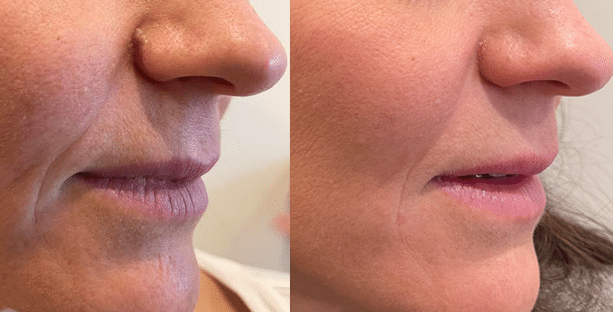
*Individual results may vary.