
Pigmentation Treatment in Vancouver
Medically reviewed by Dr. Mona Khurana, MD — Postgraduate Diploma in Practical Dermatology
Last reviewed: August 2026 · Read Dr. Khurana’s profile →
Pigmentation refers to uneven darkening of the skin caused by excess melanin. The most common forms are melasma, sun spots and post-inflammatory hyperpigmentation (PIH). At Shine MD, a physician-led medical skin care clinic at 4750 Main Street in Vancouver, pigmentation is treated with a combination of prescription therapy, medical-grade skincare, chemical peels and laser — selected according to the type of pigment, its depth, and the patient’s skin tone.
In this video, Dr. Khurana explains how pigment forms in the skin and why treatment plans for melasma, sun spots and post-inflammatory hyperpigmentation differ from one another.
Why Is Pigmentation Treatment Important?
At Shine MD, we understand that pigmentary conditions of the skin can carry a heavy burden for patients. Sun spots, melasma and post-inflammatory hyperpigmentation can have a profound impact on quality of life and significantly affect day-to-day decisions.
Pigmentary conditions affect all skin types and are more common in patients with skin of color, where melanocytes are more reactive to inflammation and UV exposure. Pigmentation can affect the face and body and often leads to real emotional distress. Patients living with ongoing pigmentary issues frequently make social and work-related decisions that shape their wider life trajectory.
Recognizing this, Dr. Mona Khurana and the team at Shine MD have built the clinic’s pigmentation practice around a single principle: results should not come at the cost of safety in richly pigmented skin. We treat every skin tone, from the very fair to the deeply pigmented, and our outcomes come from integrating medical management and skincare protocols with a comprehensive laser platform, so that the technology can be matched to the pigment rather than the other way around.
Pigmentation is one of the most common conditions treated at Shine MD.
The Psychosocial Impact of Pigmentation
Expert Treatment for Every Skin Type.
Pigmentary disorders — melasma, post-inflammatory hyperpigmentation, sun damage and uneven skin tone — are among the most common concerns in dermatology, and their effect reaches well beyond the skin.
In the same study, patients reported how visible pigment changes shaped how they felt about themselves and how they moved through daily life.
What Causes Pigmentation?
Skin color is determined by melanin, a natural pigment produced by specialized cells called melanocytes. When these cells become overactive or disrupted by ultraviolet light, heat, hormones, inflammation or injury, excess pigment forms, leading to uneven tone, dark patches or discoloration.
Melanin production itself is completely normal and protective. It is when that production becomes uneven or persistent that pigmentation becomes a concern, and for many patients it contributes to anxiety, low mood and, in some cases, social withdrawal.
If you have pigmentation of any kind, it is very reasonable to seek treatment that restores clarity, even tone and confidence in your skin.
Types of Pigmentation We Treat
Pigmentation
Expert Treatment for Every Skin Type.
Physician-led treatment of hyperpigmentation in skin of color — sunspots, melasma and post-inflammatory hyperpigmentation, treated with laser and light therapy chosen for your skin tone.
Sun Spots and Sun Damage
Sun exposure is one of the most common causes of uneven pigmentation. Over time, ultraviolet light stimulates melanin production, leading to concentrated dark spots also called solar lentigines, age spots or liver spots or to widespread, diffuse discoloration.
Treatment options depend on your skin type and pigmentation pattern:
- Forever Young BBL Our workhorse for sun-induced pigmentation, well suited to lighter skin types
- Forever Young BBL with Halo Clears pigment while also improving skin texture, fine lines and acne scarring
- Forever Young BBL with MOXI Pairs pigment clearance with gentle resurfacing and minimal downtime
- PicoSure Pro Our most versatile pigment laser, used where skin tone or mixed pigmentation makes broadband light less appropriate
Prevention remains essential. We emphasize sun protection, maintenance treatments and long-term skin health strategies.
Post-Inflammatory Hyperpigmentation (PIH)
Post-inflammatory hyperpigmentation occurs when inflammation or injury to the skin triggers excess melanin production. It commonly follows:
- Acne breakouts
- Eczema or dermatitis
- Allergic reactions or rashes
- Skin injuries or burns
- Cosmetic or medical procedures
PIH is particularly common in patients with medium to deeper skin tones, and it is highly treatable.
Treatment begins by settling the underlying condition — there is little value in treating pigment while the process producing it is still active — before carefully introducing:
- MOXI Gentle resurfacing, well tolerated in richly pigmented skin
- Halo Where texture or acne scarring needs treating alongside the pigment
- Aerolase One of our most effective tools for post-inflammatory hyperpigmentation, particularly over larger areas, and it also settles the acne and inflammation that generated the pigment in the first place
- PicoSure Pro For stubborn or deeper post-inflammatory pigment
Melasma
The creation of The Melasma Clinic at Shine MD reflects Dr. Mona Khurana’s commitment to treating this common, chronic and often emotionally difficult condition.
Melasma is a complex pigment disorder causing patchy, uneven darkening of the skin, most often on the face. It occurs far more frequently in women than in men, and is strongly influenced by hormonal changes including pregnancy and hormonal contraception. Sun exposure, heat and visible light are among the most significant triggers and can worsen or reactivate melasma.
Many patients have mixed hyperpigmentation — more than one cause of pigment present at once, with melasma as one contributing factor. Because of this complexity, treatment requires a thoughtful and highly customized approach.
The foundation of melasma treatment at Shine MD includes:
- Medical-grade skincare
- Prescription pigment therapies
- Strict sun protection and prevention strategies
- Cautious, staged laser protocols
- Chemical peels
- Tranexamic acid based therapy
PicoSure Pro is our first line laser for melasma based on that it targets pigment while delivering less heat to the skin than other lasers. Moxi can also be highly effective when matched to the right patient and pigment type.
Tranexamic acid based treatments are a central part of melasma management at Shine MD. Tranexamic acid interrupts the pathway that drives melanin production, and we deliver it in three ways depending on the patient:
- Oral Tranexamic Acid Prescribed and monitored under medical supervision
- Microneedling With Tranexamic Acid Delivers the medication directly into the skin
- Intradermal Tranexamic Acid Injections Targeted treatment of resistant areas
Because oral tranexamic acid is a prescription medication, you must have a physician based assessment prior to starting.
And because melasma can worsen if treated incorrectly, laser selection, energy settings and treatment timing must be carefully customized to maximize results while minimizing risk.
Melasma is a chronic condition and there is currently no permanent cure. The goal of treatment is to safely reduce pigment, maintain long-term control, and improve skin clarity and quality of life.
Long-term success depends on consistent prevention: daily sun protection, sun avoidance where possible, and ongoing maintenance tailored to each patient’s skin and lifestyle.
Pigmented Skin Lesions
Benign pigmented lesions can be safely removed using precise electrocautery technique, which removes the lesion while preserving surrounding tissue and minimizing downtime:
In patients with richly pigmented skin, we discuss the possibility of post inflammatory hyperpigmentation and develop a comprehensive treatment plan to ensure optimal results.
Matching the Treatment to the Pigment
Sun spots are treated at Shine MD with Forever Young BBL®, either alone or combined with Halo™ or MOXI® to accelerate results. PicoSure Pro is used where the patient’s skin tone makes broadband light less appropriate.
Post-inflammatory hyperpigmentation (PIH) is treated with MOXI®, Halo™, Aerolase® or PicoSure Pro. Aerolase® is one of our most effective tools for PIH, particularly across larger areas, because it also settles the inflammation that generated the pigment. Treatment begins only once that underlying inflammation is controlled.
Melasma is treated with PicoSure Pro as first-line laser therapy, supported by MOXI®, chemical peels — salicylic, glycolic, Vivier and Jessner peels can all improve melasma — and tranexamic acid based treatments, delivered as oral medication under medical supervision, as microneedling with tranexamic acid, or as intradermal injections. Melasma is managed rather than cured, and long-term control depends on daily sun protection and maintenance.
Shine MD also treats post-inflammatory erythema, nevus of Ota and Hori’s nevus, periorbital hyperpigmentation, benign pigmented lesions and loss of pigment. Because these conditions look similar but respond to entirely different treatments, accurate diagnosis at consultation determines the plan.
Our Inclusive Approach to Pigmentation Treatment
At Shine MD, inclusivity is central to our treatment philosophy. Many pigmentation treatments have historically carried higher risk for darker skin tones. Our clinic is equipped with technology and protocols designed to safely treat the full spectrum of skin color, from the very fair to the deeply pigmented.
Dr. Khurana’s clinical focus is pigmentary disorders and treatment for skin of color. Our team prioritizes safe device selection, conservative and precisely chosen laser settings, and structured pre- and post-treatment care to maximize results while minimizing the risk of making pigment worse.
Personalized Pigmentation Care
No two pigmentation concerns are identical. During your consultation we assess:
- Your skin type and tone
- The type and depth of your pigmentation
- Any underlying skin conditions driving it
- Lifestyle and environmental factors
- Your long-term skin health goals
From there we build a treatment plan designed for safe, gradual and lasting improvement.
What Pigmentation Treatment Costs in Vancouver
Pricing varies. Cost depends on your condition, the device or devices used, and how many treatments your skin needs — which is why a consultation is necessary before we can quote you.
Pigmentation treatment is an investment, and what it buys is safety. Your plan is built under physician oversight, using vetted protocols and years of experience treating skin of color. Getting this right the first time matters more here than in almost any other area of skin care.
You leave your consultation with a written treatment plan and a full cost estimate before anything is booked.
Assessment of pigmented lesions may be eligible for MSP coverage when referred. Financing is available through Affirm and Beautifi.
Why Patients Choose Shine MD for Pigmentation
Shine MD is a physician-led medical skin care clinic on Main Street in Vancouver. Pigmentation is one of the conditions we treat most frequently, and our approach rests on three things:
- Protocols built for every skin tone. Settings, staging and aftercare are modified for richly pigmented skin, not applied uniformly.
- Device selection that fits the patient. A comprehensive laser platform means we can build a plan around your skin type, your tolerance for downtime and what you actually need — rather than fitting you to whichever device we have.
- Physician oversight. Prescription therapy, laser selection and treatment sequencing are directed by Dr. Khurana, whose clinical focus is pigmentary disorders and skin of color.
We are committed to helping patients achieve clearer, healthier skin while respecting every skin tone
Pigmentation Treatment: Common Questions
How long does it take for hyperpigmentation to fade?
It depends on the type of pigment you have. Some pigment lifts quickly with just a few treatments. Other types need longer, more coordinated treatment plans. This is where our expertise matters, and where a consultation helps — you leave knowing what your timeline realistically looks like.
Can laser make melasma worse?
Yes. Melasma is heat-sensitive, and treatment at excessive energy or with the wrong device can trigger rebound pigmentation that is harder to treat than the original condition. This is why device selection, settings and timing are conservative and individualized at Shine MD, and why we prepare the skin with prescription therapy before adding laser treatments for melasma.
Is laser treatment safe for brown and black skin?
Yes, when the device and settings are appropriate. The risk in deeper skin tones is that laser energy stimulates melanocytes and causes post-inflammatory hyperpigmentation. We use technology validated across the full range of skin tones, modify settings accordingly, and prime and protect the skin before and after treatment.
What's the difference between melasma and sun spots?
Sun spots are discrete, well-defined dark spots caused by cumulative UV exposure. Melasma appears as larger, patchy, symmetrical areas of darkening, is multifactorial, and fluctuates over time. They respond to different protocols, and many patients have both.
Will my pigmentation come back?
Sun spots treated successfully may not return in the same place, but new ones can form with further sun exposure. Melasma is chronic and recurrence is expected without maintenance. Post-inflammatory hyperpigmentation will return if the underlying condition producing it — usually acne — is not controlled. Daily sun protection and medical management of skin conditions will improve your outcomes.
How many treatments will I need?
Most pigmentation plans involve a series rather than a single session, and the number depends on the pigment type and depth. You’ll receive a specific plan and cost estimate at consultation.
Do I need to stop any skincare before treatment?
Usually yes. Retinoids and exfoliating acids are typically paused before laser treatment, and specific prescription agents may be started beforehand to prepare the skin. This will be planned during your consultation.
Can I be treated while pregnant or breastfeeding?
Several pigmentation therapies, including hydroquinone and retinoids, are not used in pregnancy or breastfeeding. Melasma that develops in pregnancy often improves after delivery. We can build a pregnancy-safe plan focused on sun protection and appropriate topicals, and revisit fuller treatment afterwards.
Is pigmentation ever a sign of something serious?
Most pigmentation is benign, but any pigmented lesion that changes in size, shape, colour or border, or that bleeds, should be assessed. Assessment of pigmented lesions may be MSP-eligible.
Discover Our
Before & After Gallery
Want to see real patient results from our innovative skin treatments? View our impressive before and after images in our photo gallery.
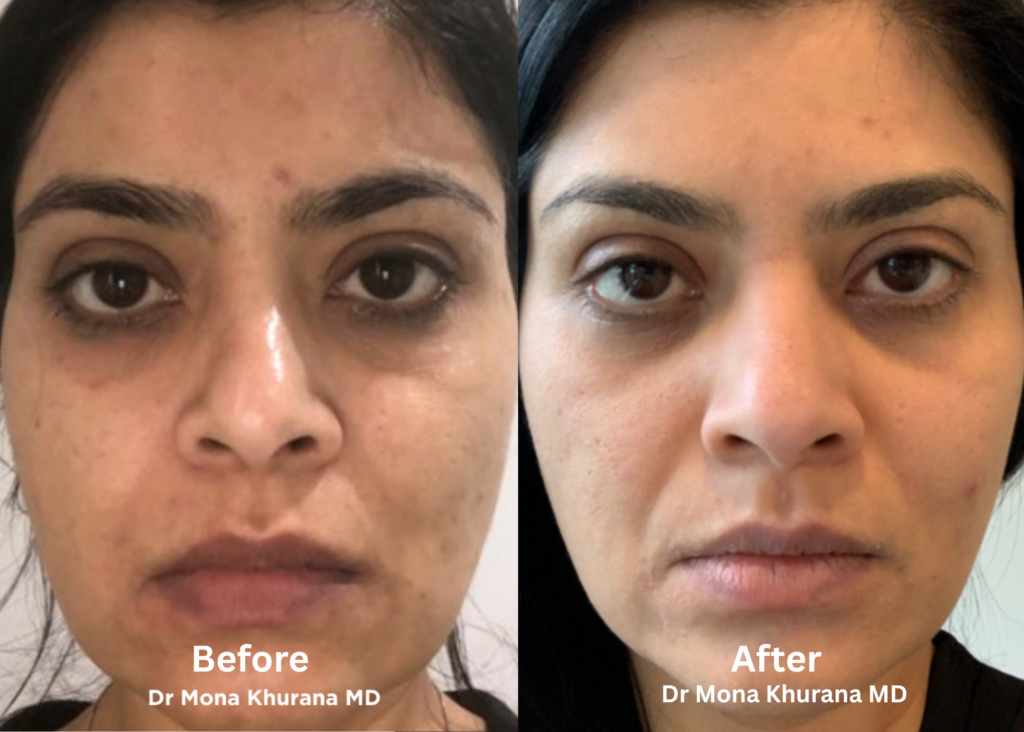
*Individual results may vary.
Ready to Start Your Pigmentation Journey?
Book a consultation at our Vancouver clinic and receive a treatment plan built for your skin type and your specific type of pigmentation.